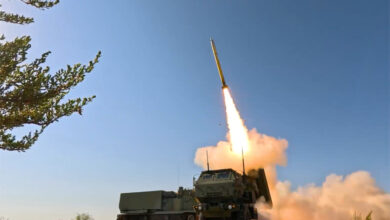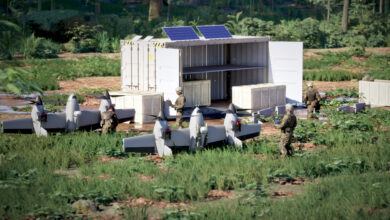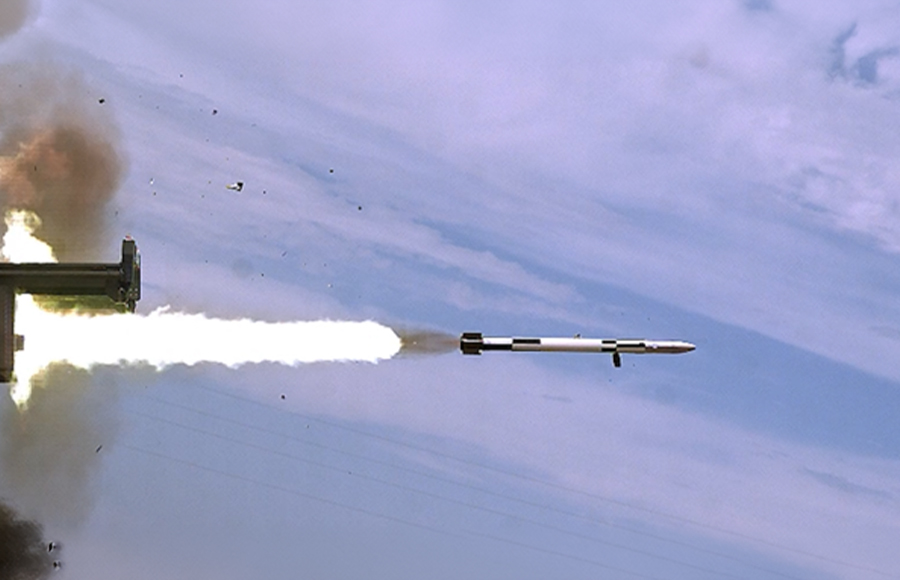

Lockheed Martin fired 24 rounds of its Joint Reduced Range Rocket (JR3), a low-cost HIMARS training rocket with a reusable pod, in a third test in Arizona.
The flight test at Yuma Proving Ground demonstrated the rocket’s range, trajectory, accuracy, and marking-payload effects, Lockheed said.
The company is developing JR3 as a potential replacement for the Reduced Range Practice Rocket used by US Army and international crews on the M142 HIMARS and M270 launchers.
Practice rockets let launcher crews train with live fire without using full-range combat rockets. Lockheed’s JR3 pairs a low-cost motor built on existing rocket motor technology with an adaptable payload, and the 24-round pod and its tubes can be reloaded and reused, the company said.
The design is meant to cut the cost of each training round and allow live-fire drills on constrained ranges, day or night.
“With a 24-round rocket launch pod, our JR3 system meets the Army’s demand for higher training volume and lower cost without sacrificing performance,” said Sabrina Barnes, vice president of Lockheed Martin Precision Fires Rockets.
The November salvo followed a second test in August, when JR3 rounds were launched from a HIMARS at Yuma, according to Lockheed. The company’s first JR3 flight test took place at White Sands Missile Range in September 2025.
Raytheon is developing a competing design and completed the third flight test of its DeepStrike JR3 at Yuma earlier this month, also using a recoverable 24-rocket pod, and said it was preparing for more flight tests before qualification.
Both companies are pitching for the US Army’s effort to replace its current practice rocket. Lockheed also builds the GMLRS guided rocket fired from HIMARS, and this month said it had retargeted a GMLRS round in mid-flight during a test.