The International Committee of the Red Cross warned that governments are running out of time to set binding limits on autonomous weapons after a week of UN talks in Geneva ended without agreement on a regulatory framework, The Guardian reported.
More than 120 countries took part in the conference under the UN Convention on Certain Conventional Weapons.
They agreed to continue discussing a possible framework over the next two years.
Cordula Droege, the ICRC’s director of international law, said AI was already appearing on battlefields and could also be in some weapons systems.
As militaries adopt those technologies, she warned, governments will find it harder to agree on limits for their use.
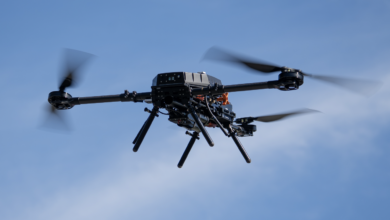
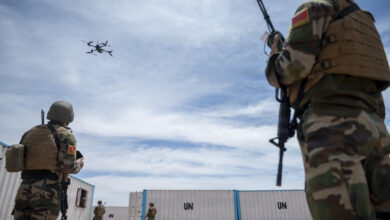
Anna Hehir, who leads military AI governance at the Future of Life Institute, said militaries and manufacturers are developing swarms that could deploy hundreds or even thousands of autonomous drones at once.
She warned that a single targeting error could spread through the swarm, causing multiple drones to act on the same mistake.
The risk of mass civilian casualties, she said, would be particularly acute if the drones were programmed to target people.
Drawing the Line
Rights groups said further delays in developing and adopting binding limits would give militaries and manufacturers more time to establish practices before governments agree on where to draw the line.
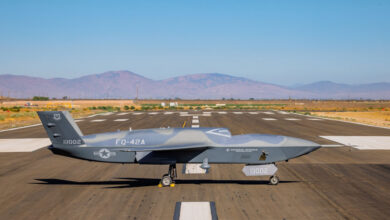
An autonomous weapon can find, select and engage a target after activation without a human operator choosing that specific target.
AI can flag potential targets for human review. An autonomous weapon goes further. Once activated, it can select and strike a target without a person making that specific decision.
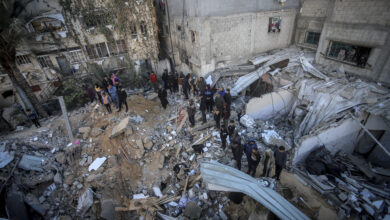
According to The Guardian, autonomous weapons “include the use of AI in generating target banks, as was done by the Israeli military in Gaza, as well as semi-autonomous drones in the Ukraine-Russia war, which have last-mile capability, where AI takes over in the drone’s final approach to its target.”
ICRC President Mirjana Spoljaric and UN Secretary-General António Guterres have called for a legally binding agreement.
The ICRC wants it to ban autonomous weapons designed or used to target people and prohibit systems whose effects cannot be sufficiently predicted.
It also wants restrictions on other autonomous weapons, including limits on the types of military targets they can engage and the circumstances in which they can be used.