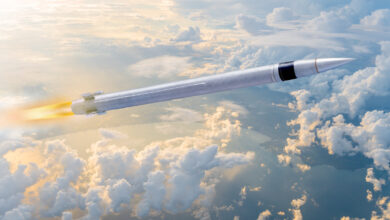
The US Department of State has approved a potential $2.1-billion sale of Patriot Advanced Capability-3 Missile Segment Enhancement (PAC-3 MSE) interceptors to Ukraine.
Kyiv has requested 500 PAC-3 MSE interceptors to replenish its stocks for existing Patriot air defense systems.
Ukraine reportedly operates eight Patriot systems supplied by the US and other partner countries but faces ammunition shortages as Russia increasingly relies on ballistic missiles in its attacks.
Canada, Germany, and Norway are expected to fund the purchase through contributions under the JUMPSTART program, alongside Ukrainian funds backed by the EU’s Ukraine Support Loan. No US government funding is involved.
Developed by Lockheed Martin, the program’s prime contractor, the PAC-3 MSE is an advanced hit-to-kill interceptor for the Patriot air defense system, designed to intercept aircraft, cruise missiles, and ballistic missiles.
Stocks of the interceptors have come under pressure from sustained demand amid the war in Ukraine and expanding conflicts in the Middle East. To expand output, the US Department of Defense has awarded Lockheed Martin a contract worth up to $53.86 billion to increase PAC-3 MSE production through 2033.
Zelensky Urges Immediate Deliveries
Welcoming the approval, Ukrainian President Volodymyr Zelensky warned that deliveries could take several years and urged Washington and its allies to transfer interceptors from existing stocks to address Ukraine’s immediate requirements.
“A strong decision by the US State Department – authorising Ukraine’s purchase of Patriot interceptors to counter Russian ballistic missiles. Five hundred PAC-3 interceptors is a substantial number, and very soon – this winter – they COULD make for a highly effective defence package,” Zelensky said on X.
“However, it has been stipulated that deliveries may begin ONLY IN A FEW YEARS. We are asking our American partners to find a solution for the time when there is a real danger and a real need to use PAC-3 interceptors,” he added.
Zelensky proposed that the US and its European and other partners draw on their existing interceptor inventories to meet Ukraine’s immediate needs, replenishing their stocks in subsequent years through production under the new contract.