Russia Reportedly Aiding Iran’s Development of Supersonic Cruise Missile


Russia has provided Iran with technical assistance for a program to develop supersonic cruise missile technology, potentially giving Tehran a new capability against naval and land targets, the Financial Times reported.
The newspaper said the covert effort, known as C430L, began in 2023 and involves Russian specialists helping Iran develop a ramjet propulsion system.
The technology could enable a cruise missile to sustain speeds above Mach 1, although the report found no evidence that an operational Russian-assisted missile has been deployed.
According to documents reviewed by the Financial Times, Russia’s state arms exporter Rosoboronexport arranged the cooperation with NPO Mashinostroyenia, a major missile manufacturer. Russian engineers reportedly traveled to Iran and examined data from Iranian propulsion and flight tests.
“This is the transfer of a highly strategically sensitive military technology from Russia that the Iranians have wanted to acquire for decades,” Fabian Hinz, a senior analyst at Conflict Armament Research, told the British daily.
Assistance Continued During 2026 Conflict
The reported cooperation continued after the outbreak of the 2026 US-Israeli war with Iran. A June 2026 Rosoboronexport letter reportedly showed the two sides discussing further technical work and Russian reports on the program.
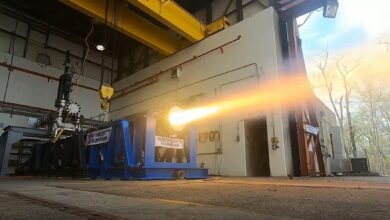
Documents cited by the Financial Times indicate Russian specialists examined Iran’s propulsion system, including its fuel, combustion stability, air intake, and nozzle performance. Rosoboronexport also proposed sending about two dozen specialists to Iran in April 2025.
“For the Iranians, this would give them a qualitatively new strategic weapon system that could threaten US Navy vessels,” Jim Lamson, a former CIA military analyst focused on Iran, said.
Iran has developed ballistic missiles and several types of cruise missiles, but sustained supersonic flight using a ramjet presents different engineering challenges. Ramjets use the missile’s forward motion to compress incoming air before combustion, making them suited to high-speed flight but requiring careful control of fuel, airflow, and combustion.
Iran publicly displayed a domestically developed ramjet engine in 2019. In 2023, state media reported that the Islamic Revolutionary Guard Corps had begun testing a prototype supersonic cruise missile.
The Financial Times identified several NPO Mashinostroyenia specialists as participants in the Russian effort, including senior propulsion and missile designers. Neither the Russian government, Rosoboronexport, nor NPO Mashinostroyenia responded to the newspaper’s requests for comment. Iran also did not respond.
“The secret ramjet program shows Russia is trying to broaden the Ukraine war and draw the US into different theatres,” Nicole Grajewski, a professor at Sciences Po University in Paris, told the outlet.