NATO’s top military commander has presented a three-stage approach to counter Russia in the event of an attack on allied territory, Rapporteur reported.
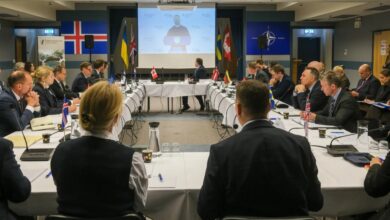
Speaking at a security conference in Warsaw, US General Alexus Grynkewich, NATO’s Supreme Allied Commander Europe, described his “Theory of Victory” as a concept grounded in the alliance’s existing Euro-Atlantic defense strategy, agreed by all 32 members.
Grynkewich described a “block, blunt, break” concept outlining how NATO would shift from defending allied territory to disrupting the military networks sustaining an attack.
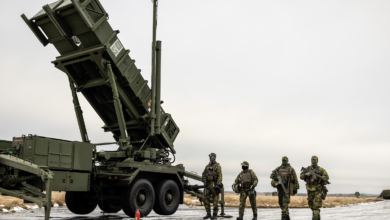
The opening phase would task ground forces with stopping the initial assault and preventing territorial gains.
Air and naval units would support that defense by seeking control of the airspace and surrounding waters.
If the attack continued, NATO would use advanced sensors to locate enemy forces and autonomous systems to help disrupt their operations.
Allied forces would coordinate across land, air, sea, space, and cyberspace to halt further advances.
The final phase would target both the attacking units and the supply lines and command networks supporting them.
NATO would combine precision weapons with lower-cost systems that could be deployed in large numbers to finally push the attacking force to the point where it can no longer carry out its offensive.
Security Concerns
Grynkewich’s remarks come amid concerns about Russian activity beyond Ukraine.
Since Moscow launched its full-scale invasion in 2022, European countries have accused it of conducting sabotage and covert operations across the continent.
In June, The Guardian reported that Latvian intelligence had indications of preparations for a possible Russian military provocation targeting Poland or the Baltic states.
The assessment suggested that Moscow lacked the capacity to sustain a second front but could use smaller military actions, including drone or missile strikes, alongside hybrid operations to pressure countries supplying Ukraine.