The European Defence Fund (EDF) has received a record 612 proposals competing for this year’s 1 billion euros ($1.1 billion) in collaborative defense research and development funding, in a round open to Ukrainian applicants for the first time.
Applications rose 49 percent from last year, following a 38 percent increase between 2024 and 2025.
The EDF said a simpler application process helped drive the strong response from small and medium-sized enterprises.
The European Commission will now review the proposals for eligibility before evaluating their scientific quality, compliance with funding criteria, and ethical requirements, with support from independent experts.
Results are expected by March 2027.
Missile Defense, Tanks, and Naval Systems
Around half of the funding will support joint research and development on major military capabilities.
Several calls aim to build on earlier EDF-funded projects, advancing their results into prototypes ready for production and procurement.
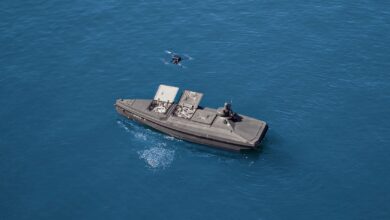
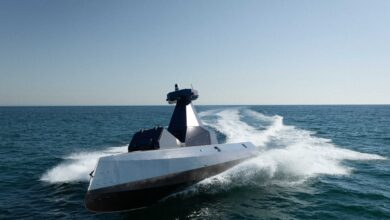
These include a European missile interceptor that operates within the atmosphere, a next-generation main battle tank, a multiple rocket launcher, and a semi-autonomous naval vessel.
Other priorities include quantum-secured communications, electronic warfare, cloud systems that support operations across military domains, and high-performance energy systems.
A quarter of the budget will support the EU Defence Innovation Scheme (EUDIS), with around 60 million euros ($67 million) earmarked for disruptive defense technologies.
Separate calls offering euros 60 million ($67 million) to small and medium-sized enterprises attracted particularly strong interest, the Commission said.
These allow companies to propose their own projects without focusing on a prescribed technology area.
Funding for Testing in Ukraine
The funding round comes as the European Parliament last month approved measures that would help defense companies test EDF-backed technologies in Ukraine.
Under the Defense Readiness Omnibus, projects could claim funding for testing conducted there, giving developers access to Ukrainian military feedback as they refine equipment.
The provisions cover short trials, repeated assessments, and use in combat, allowing operational experience to inform both new systems and upgrades.