The International Court of Justice ruled that Myanmar committed genocide against the Rohingya, the first time the UN’s top court has found a state responsible for genocide.
In its judgment in The Gambia v. Myanmar, the court found that Myanmar’s security forces and other state organs carried out acts prohibited under the Genocide Convention: killing members of the group, causing serious bodily or mental harm, and imposing measures intended to prevent births.
ICJ President Yuji Iwasawa, who read the judgment over about three hours, said Myanmar also failed to prevent and punish genocide.
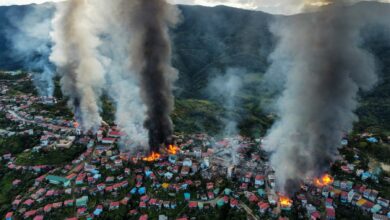
The case centers on the military’s 2017 clearance operations in Rakhine state. The court estimated about 10,000 Rohingya were killed and roughly 700,000 fled to Bangladesh, and that nearly 400 villages, about 40 percent of those in three northern Rakhine townships, were partly or fully destroyed.
The court ordered Myanmar to enact legislation fully implementing its obligations under the convention, to investigate and where warranted prosecute those reasonably suspected of genocidal acts, and to give guarantees that the violations will not recur.
It also ordered restitution, including the safe, voluntary, and dignified return of the Rohingya and family reunification, and compensation for the Rohingya group and its members.
UN Secretary-General António Guterres called the ruling a “powerful recognition of the Rohingya victims of genocide.”
The Gambia filed the case in November 2019. In earlier genocide cases, the court found in 2007 that Serbia breached its duty to prevent the Srebrenica genocide and in 2015 dismissed Croatia’s case against Serbia for lack of proven genocidal intent.
Myanmar must report to the court on restitution and compensation within two years. The court will set the amount and terms of compensation in a later phase.