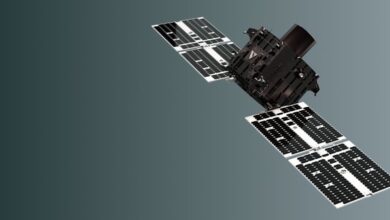
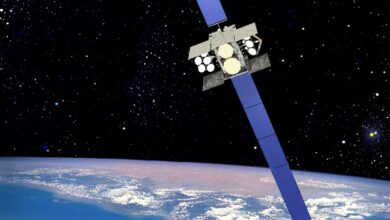
BAE Systems has completed the Critical Design Review (CDR) for the $1.2-billion US Space Force Space Systems Command’s satellite-based missile warning and tracking Epoch 2 program designed to operate in medium Earth orbit (MEO).
The CDR comes 14 months after the contract was awarded to BAE Systems in June 2025. It confirms that the design meets operational, performance, and safety requirements and is ready to advance to production.
Epoch 2 will deliver a 10-satellite constellation and ground systems for mission planning, command and control, and data distribution. The satellites will use infrared sensors to detect missile launches through their heat signatures and transmit the data to ground systems.
BAE Systems will use its TREK product bus and infrared payload expertise to provide resilient, space-based missile warning capabilities. The contract covers a four-year delivery period, followed by five years of operations and support.
The first Epoch 2 satellite is expected to be delivered in fiscal year 2029. The second-generation satellites are intended to operate alongside Epoch 1 satellites being developed by Boeing subsidiary Millennium Space Systems and L3Harris.
“Digital modelling and simulation, based on early collaboration and ongoing communication with the customer, helped us to achieve this successful Critical Design Review quickly,” vice president and general manager of Military Space for BAE Systems Space & Mission Systems Thai Sheridan said.
“We’re now able to fully engage our vertically integrated production capabilities as we guide the program with mission planning, payload and bus delivery, and operational command and control capabilities.”
Resilient Missile Warning & Tracking
Epoch 2 is part of the multi-stage Resilient Missile Warning & Tracking effort, which comprises a constellation of satellites designed to detect and track ballistic and hypersonic threats.
The Epoch 1 program initially included Raytheon Intelligence & Space, which was contracted in 2021 but removed from the program in 2024 following cost overruns and design challenges. L3Harris joined the effort in 2023 to develop the spacecraft’s sensor payload.
The 12-unit Epoch 1 constellation consists of two sets of six satellites. The first set is scheduled to begin launching in 2027, while the second set is expected in fiscal year 2028.
The US Space Force plans to introduce MEO satellites with enhanced capabilities every two to three years and maintain a baseline constellation of about 30 satellites.