From the battlefields of the Cold War to modern conflicts in Europe and the Middle East, the main battle tank has remained one of the most recognizable symbols of military power.
Combining heavy armor, powerful weaponry, and battlefield mobility, MBTs are designed to spearhead offensive operations while surviving in some of the most dangerous combat environments on Earth.
So, what exactly is an MBT, and why does it continue to play such an important role in modern warfare?

What Does MBT Stand For?
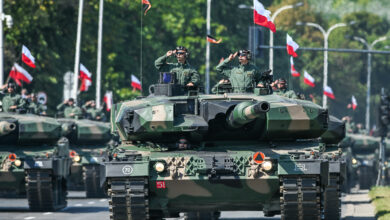
MBT stands for Main Battle Tank. It is a heavily armored combat vehicle designed to serve as an army’s primary armored fighting platform.
Unlike earlier tank classifications such as light, medium, and heavy tanks, the MBT concept emerged during the Cold War as militaries sought a single vehicle capable of multiple battlefield roles.
Advances in armor, firepower, and engine technology made it possible to combine heavy-tank protection, light-tank mobility, and medium-tank firepower into a single versatile platform. Today, the MBT serves as the backbone of armored forces worldwide.
Examples of Modern MBTs
Several countries operate advanced main battle tanks as part of their armored forces, including:
- M1 Abrams (US)
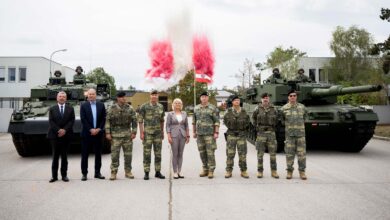
- Leopard 2 (Germany)
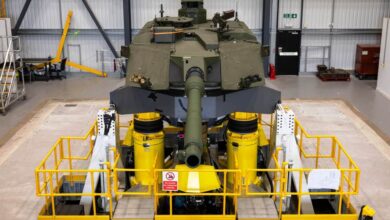
- Challenger 3 (UK)
- Leclerc (France)
- T-90M (Russia)
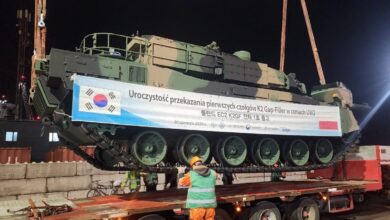
- K2 Black Panther (South Korea)
- Type 10 (Japan)
- Merkava (Israel)
Although each tank reflects its country’s operational requirements and military doctrine, they all embody the core MBT principle of serving as an all-around armored fighting vehicle capable of engaging, surviving, and maneuvering across a wide range of combat scenarios.

What Does a Main Battle Tank Do?
An MBT’s primary mission is to engage and destroy enemy forces while supporting ground operations. Main battle tanks are designed to fight other armored vehicles, provide direct fire support to infantry, and help seize or defend key terrain.
A modern MBT typically combines three core characteristics:
Firepower
Most modern MBTs carry a 120mm or 125mm smoothbore cannon that can engage enemy armor, fortifications, and other battlefield targets at long range.
Many also fire programmable ammunition and guided anti-tank rounds, while advanced fire-control systems improve first-round hit probability even when the tank is moving.
Protection
Modern MBTs combine composite armor with additional protective measures such as explosive reactive armor (ERA), slat armor, and active protection systems (APS).
These layered defenses counter kinetic penetrators, shaped-charge warheads, anti-tank guided missiles, and loitering munitions, while improved crew layouts and ammunition storage increase survivability.
Mobility
High-output diesel or gas turbine engines, advanced transmissions, and modern suspension systems enable MBTs to traverse difficult terrain while keeping pace with mechanized forces.
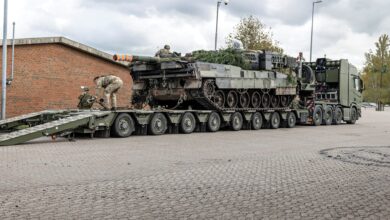
Despite weighing 55 to 70 tons, many can travel over 37 miles (60 kilometers) on roads and maintain strong cross-country mobility.
| Tank: | Country: | Firepower: | Protection: | Mobility: |
| M1A2 SEPv3 Abrams | US | 120mm M256 smoothbore | Composite armor, depleted uranium inserts (classified), Trophy APS (some variants) | 1,500-hp gas turbine, ~67 kilometers/41.6 miles per hour |
| Leopard 2A8 | Germany | 120mm L55A1 smoothbore | Composite armor, Trophy APS | 1,500-hp diesel, ~70 kilometers/43.5 miles per hour |
| Leclerc XLR | France | 120mm CN120-26 smoothbore with autoloader | Modular composite armor, upgraded battlefield protection | 1,500-hp diesel, ~72 kilometers/44.7 miles per hour |
| Challenger 3 | UK | 120mm L55A1 smoothbore | New modular armor, APS planned | 1,500-hp diesel, ~60 kilometers/37.3 miles per hour |
| K2 Black Panther | South Korea | 120mm L55 smoothbore with autoloader | Composite armor, hard-kill APS planned | 1,500-hp diesel, hydropneumatic suspension, ~70 kilometers/43.5 miles per hour |
| Type 10 | Japan | 120mm smoothbore | Modular composite armor | 1,200-hp diesel, optimized for mobility, ~70 kilometers/43.5 miles per hour |
| T-90M Proryv | Russia | 125mm 2A46M-5 smoothbore | Relikt ERA, soft-/hard-kill countermeasures | 1,130-hp diesel, ~60 kilometers/37.3 miles per hour |
| Merkava | Israel | 120-mm smoothbore gun | Modular composite armor and Trophy APS | 1,500-hp diesel engine, ~64 kilometers/39.8 miles per hour |

The Future of the Main Battle Tank
The war in Ukraine has reignited a debate that surfaces after every major conflict: is the main battle tank obsolete?
The evidence cuts both ways. By late May 2026, open-source tracker Oryx had visually confirmed 4,390 destroyed Russian tanks since February 2022 — roughly 2.8 per day, and likely undercounted.
Modern MBTs are extremely well-armored on all sides, but their unarmored turret roofs present a unique tactical opportunity that drones are perfectly poised to exploit: striking from above, capitalizing on a vulnerability previously only accessible through costly top-attack missiles like the Javelin. The US learned that lesson with its own Abrams, where Ukraine pulled them from the front in 2024 after five of 31 were lost.
Yet the obituary keeps being written prematurely. The main lesson of Ukraine is not the obsolescence of tanks and heavy armor, but the fact that no side can achieve its political objectives with missiles and drones alone.
Tanks have still played a crucial role in helping Ukrainian forces advance, support infantry, deliver protected firepower, and hold or retake ground. And even when the conflict became more static, tanks were used for indirect fire to replace artillery.
The response from tank designers has been rapid. Innovations such as cage armor and active protection systems have been introduced to counter drone threats, offering enhanced survivability against a wider range of attacks.
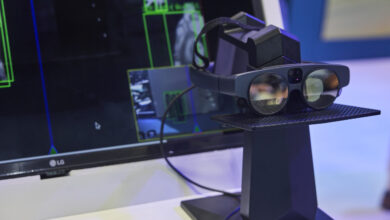
Modern battlefields are evolving into highly networked, sensor-driven environments where visibility, reaction speed, and information superiority are crucial. The central question is not whether tanks have a future, but how they must evolve to survive.
The answer emerging from Ukraine is that the tank’s future depends less on the platform itself and more on how it is integrated into a combined-arms system.
Tanks operating without infantry, air cover, and drone support are vulnerable. Tanks operating within a properly networked force — with reconnaissance drones clearing the way, electronic warfare suppressing threats, and active protection systems intercepting incoming fire — remain among the most effective tools for taking and holding ground.
The MBT is not dying. It is being redesigned for an era in which it can no longer fight alone.