Northrop Grumman is expanding defense industry partnerships in Central and Eastern Europe, covering air defense, armored vehicles, and surveillance systems.
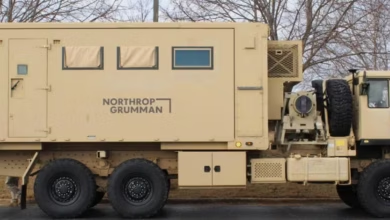
In Estonia, the company signed memorandums of agreement with Go Craft for defense system integration and DefSecIntel for specialized mast fabrication and production. Both partnerships will support the company’s Integrated Battle Command System (IBCS).
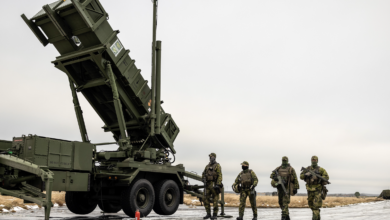
IBCS connects sensors and weapons from different systems and services to provide a common picture of the battlespace. Poland has declared its IBCS system combat-ready, making the country one of the first operators of the network outside the US.
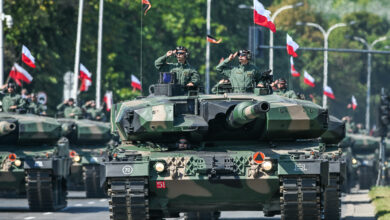
The company is also expanding its cooperation with Polish defense manufacturer Huta Stalowa Wola on its Bushmaster chain guns. The medium-caliber weapons are used on Polish Rosomak and Borsuk armored vehicles, and the companies are working on technology transfer, servicing, and support.
Beyond land systems, Northrop Grumman said it is continuing discussions with Poland over the E-2D Advanced Hawkeye airborne command-and-control aircraft. The company is positioning the aircraft for potential adoption, training, and industrial cooperation with Poland.
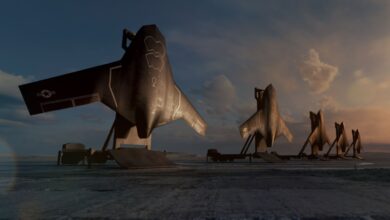
It also highlighted Raid Hunter, a counter-air system designed to engage large numbers of drones, drone swarms, and cruise missiles.
Eastern Europe Builds Up Defenses
NATO has increased its military presence and surveillance in the region since Russia’s full-scale invasion of Ukraine. The alliance has also strengthened its eastern flank with additional air policing, ground forces, exercises, and integrated air and missile defense measures.
Russia’s war in Ukraine has demonstrated the scale and variety of aerial threats that modern forces can face, from cruise missiles and ballistic missiles to inexpensive drones used in large numbers.
This makes the latest deals important, according to vice president Ben Davies, who said “Central and Eastern Europe is at the forefront of efforts to strengthen NATO’s collective defense posture.”
“By deepening our collaboration with local industry and aligning our advanced, modernized capabilities with the needs of regional allies, we are helping to build a more integrated, resilient and effective defense architecture across domains,” he said.