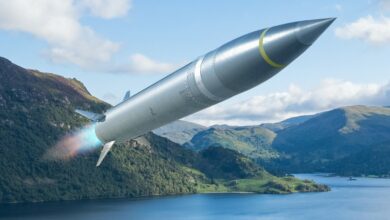
The US Air Force has awarded Lockheed Martin an $825.97-million contract modification to procure the Long-Range Anti-Ship Missile (LRASM) and the Joint Air-to-Surface Standoff Missile (JASSM).
Under the modification, the contract’s total cumulative face value increases to $10.46 billion from $9.64 billion. Work will be performed in Orlando, Florida, and is expected to be completed by July 31, 2030.
Funding will come from fiscal 2024–2026 appropriations for missile and weapons procurement, research and development, and operations and maintenance. The modification also includes $11.1 million in Foreign Military Sales funds.
Production Expansion
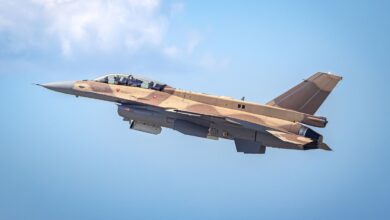
The contract comes as the US Air Force plans to significantly expand production of the two missiles following the extensive use of the JASSM during the conflict with Iran.
Plans could support procurement of up to 11,200 JASSM and LRASM missiles across Lots 27–33 and 13–19, respectively, over the next five to seven years, averaging more than 1,000 missiles annually. By comparison, the fiscal year 2025 budget funded 450 JASSMs and 115 LRASMs.
Extensive Iran Deployment
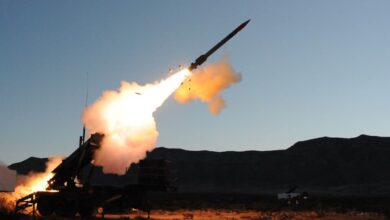
Capable of striking targets more than 500 nautical miles (575 miles/965 kilometers) away, the JASSM-ER carries a 992-pound (450-kilogram) warhead and is designed to penetrate air defenses and hit hardened targets.
A Center for Strategic and International Studies report published April 21 said the US military used more than 1,000 JASSMs, mainly AGM-158B JASSM-ERs, against Iranian targets, making it the campaign’s most widely used offensive munition, ahead of the Tomahawk.
Bloomberg reported that the US shifted JASSMs from reserves previously allocated to other regions, including the Pacific, to US Central Command and Europe, leaving only about 425 JASSM-ERs available for other theaters from a prewar inventory of roughly 2,300.
Common Origin
The LRASM (AGM-158C) is based on the JASSM-ER (AGM-158B), sharing its stealthy airframe, Williams F107 turbofan engine, wings, tail assembly, fuel system, and several avionics and manufacturing processes.
Both are low-observable cruise missiles carrying a 992-pound (450-kilogram) penetrating blast-fragmentation warhead.
The JASSM uses GPS-aided inertial navigation and an imaging infrared seeker against fixed land targets, while the LRASM combines passive radio-frequency sensors, an infrared seeker, a two-way datalink, and autonomous targeting to engage warships in GPS-denied environments.
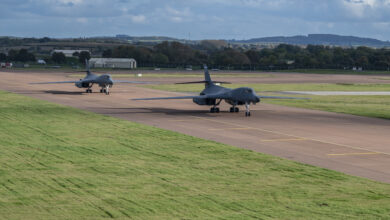
Although the Pentagon has not confirmed LRASM use in the Iran campaign, the missile remains central to US Indo-Pacific planning. In June, the air force demonstrated its B-2 integration during Exercise Valiant Shield 2026 in a live-fire strike against a decommissioned vessel.