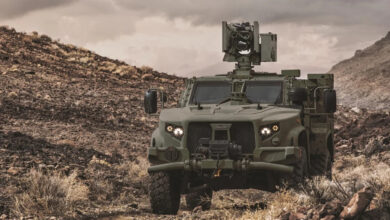
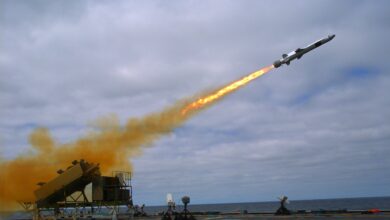
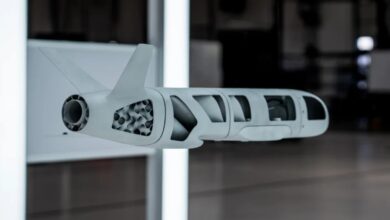
Kongsberg is investing in industrial metal 3D printing to speed up the development and production of defense systems in Norway.
The Norwegian defense company is working with Germany’s EOS and its AMCM affiliate, acquiring two multi-laser additive manufacturing systems for its defense and security programs.
The machines, an AMCM M 4K and an AMCM M 290-2 1KW, will be installed at Kongsberg’s main production facility. The company said they can produce full-scale sections for technology demonstrators, product qualification, and flight-ready hardware.
Kongsberg expects the technology to shorten development cycles by allowing engineers to move from digital designs to physical hardware earlier in the development process.
“Additive manufacturing is opening a whole new opportunity to challenge the traditional design- and manufacturing process moving forward and represents a new way of thinking in design and manufacturing,” Sverre Ulland, SVP Strategic Production at Kongsberg’s Missiles & Aerostructures division, said.
EOS and AMCM will support the initial rollout through their Additive Minds consulting unit, working with Kongsberg on incorporating 3D printing into its design and production processes.
3D Printing for European Defense
Additive manufacturing is becoming a bigger part of defense production as European militaries look for ways to shorten supply chains, produce components closer to where they are needed, and keep equipment in service for longer.
The European Defence Agency has been pushing the technology through its Additive Manufacturing Village and related programs. In March, the agency hosted around 800 specialists from 14 EU member states for demonstrations involving 3D-printed military components and mobile manufacturing systems.
Logistics is one of the clearest applications. The EDA has highlighted the ability to manufacture parts on demand as a way to reduce dependence on complex supply chains, address obsolete components, and support forces operating far from traditional manufacturing facilities.
European governments are also moving toward formalizing additive manufacturing for defense. The UK Ministry of Defence published its first Defence Advanced Manufacturing Strategy in March 2025, identifying additive manufacturing as a way to improve supply-chain resilience, reduce lead times, and make previously obsolete parts available again.