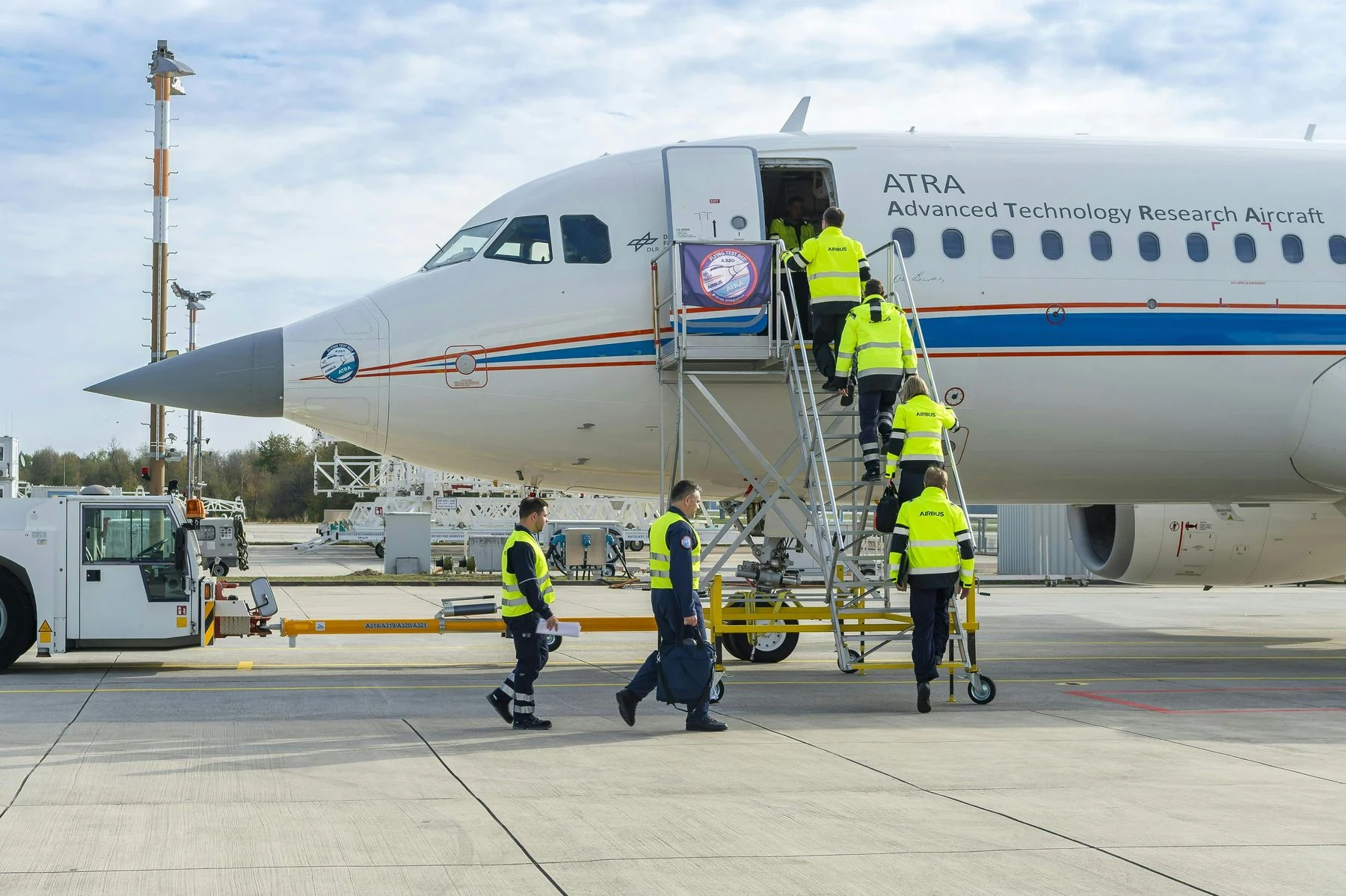

An Airbus A320 modified with a Eurofighter nose has completed its commissioning flights in Manching, Germany, clearing the aircraft to support airborne testing of the fighter’s new E-Scan radar.
Owned by the German Aerospace Center (DLR), the aircraft will serve as a “flying laboratory” for the Eurofighter Common Radar System Mk1 (ECRS Mk1).
Airbus said the flights confirmed that the aircraft and radar can operate together in flight, marking the completion of the platform’s validation phase.
The ECRS Mk1 is intended for Germany’s Quadriga and Tranche 5 Eurofighters, as well as Spain’s Halcón aircraft. Plans also call for retrofitting the radar to other fighters already in service.
The system uses an active electronically scanned array to steer radar beams electronically, enabling the detection and tracking of multiple targets.
It is designed to improve the Eurofighter’s capabilities in both air-to-air and air-to-ground missions.
Adapting the A320 for Radar Testing
Known as the A320 ATRA, or Advanced Technology Research Aircraft, the DLR-owned aircraft had supported aviation research for years before being converted for Eurofighter radar trials.
Engineers reinforced its fuselage to accommodate the customized Eurofighter nose, installed hundreds of meters of data cabling, and added liquid and air cooling systems to regulate the radar’s operating temperature.
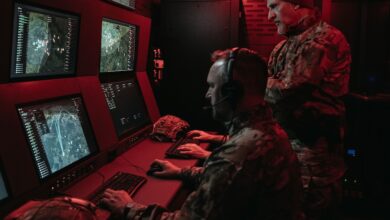
Several workstations inside the cabin allow specialists to monitor the information available to a Eurofighter pilot alongside detailed data on the radar’s internal components.
The setup enables engineers to monitor hardware performance, test software updates, and evaluate new radar functions during flights.
The modified A320 first flew in early 2025 without an active radar system to assess its airworthiness.