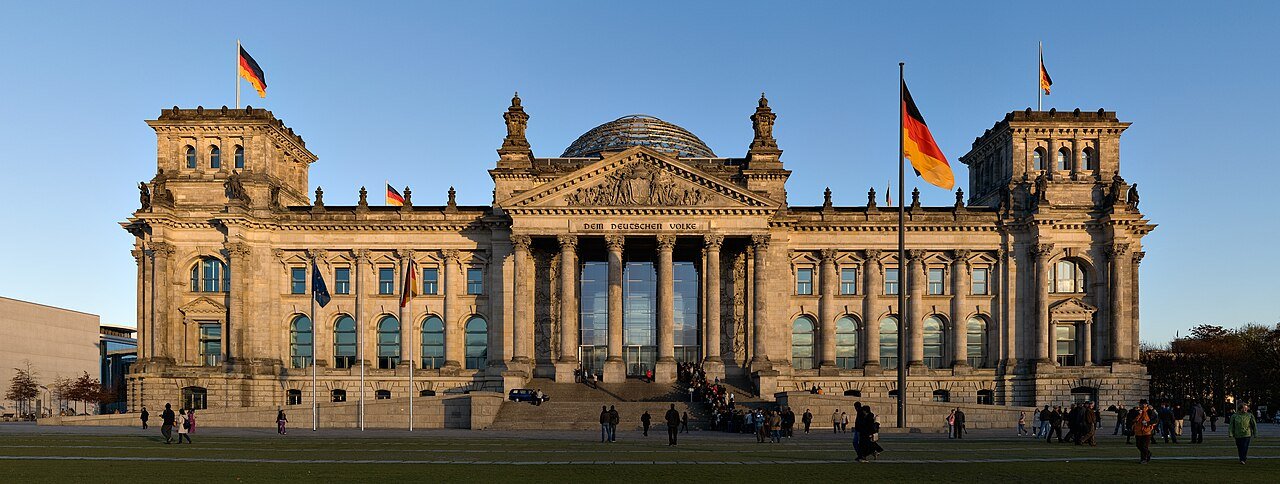

Germany’s parliament passed a 2027 federal budget on Friday that raises defense spending to about 139.4 billion euros ($152.7 billion), the highest level since the end of the Cold War.
The Bundestag approved the budget by 316 votes to 260 with no abstentions in a roll-call vote.
The Christian Democrats and Social Democrats in Chancellor Friedrich Merz‘s coalition voted in favor, while the Alternative for Germany, the Greens, and the Left Party voted against.
Total federal spending is set at 555.94 billion euros ($609.1 billion), 31.4 billion euros ($34.4 billion) more than this year, with net new borrowing of 122.97 billion euros ($134.7 billion), the Bundestag said.
Where the Defense Money Goes
The regular defense ministry budget rises to 109.7 billion euros ($120.2 billion) from 82.7 billion euros ($90.6 billion) in 2026, the parliament’s defense budget summary showed.
Another 29.6 billion euros ($32.4 billion) comes from the Bundeswehr special fund created in 2022, which is set to be fully spent by the end of 2027.
More than 60 billion euros ($65.7 billion) is earmarked for military procurement, 26.7 billion euros ($29.3 billion) for personnel, and 19.3 billion euros ($21.1 billion) for barracks, housing, and other facilities.
Lawmakers adopted the defense section on Wednesday, when Social Democrat Andreas Schwarz called the spending a historic effort driven by Russia’s war in Ukraine and hybrid threats.
Left Party lawmaker Dietmar Bartsch said the spending was not normal, arguing that Germany was set to spend more on defense than France and Britain combined.
Aid for Ukraine
The budget sets aside 11.612 billion euros ($12.7 billion) for Ukraine’s security, defense, and stabilization, slightly more than in 2026, Ukrinform reported.
More than 9 billion euros ($9.9 billion) of that goes directly to Ukraine through the defense ministry, adding to Germany’s military aid to Kyiv since 2022.
Under the government’s financial plan, the defense budget is set to rise to 153.9 billion euros ($168.6 billion) in 2028, 162.9 billion euros ($178.5 billion) in 2029, and 183.7 billion euros ($201.3 billion) in 2030.