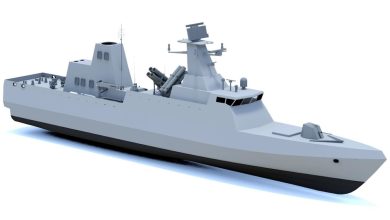
India has signed contracts worth 538.67 billion rupees ($5.7 billion) for eight next-generation corvettes designed for anti-ship and anti-submarine warfare, coastal defense, and the protection of maritime trade routes.
The Indian Defense Ministry awarded the contracts to two state-owned shipbuilders in New Delhi.
Garden Reach Shipbuilders & Engineers will build five vessels, while Goa Shipyard Limited will build the remaining three.
According to the ministry, the project is the first to combine a warship specifically designed by the Indian Navy with construction by state-owned defense shipyards.
Combat and Surveillance Roles
The corvettes will be armed with missiles, other weapons, and sensors to detect and engage threats in the air, on the sea surface, and underwater.
Their roles will also include littoral combat, maritime surveillance, and maintaining a naval presence in coastal waters.
Construction will involve Indian suppliers of materials, equipment, and technology, including smaller businesses supporting the two main shipyards.
A Wider Push for Maritime Security
The corvette program is part of India’s broader efforts to strengthen its maritime security, including its ability to monitor vessel movements across the region.
Earlier this year, Vantor secured a US Navy contract to provide satellite intelligence supporting the Indian Navy and other Indo-Pacific partners.
Its Maritime Sentry system uses AI to analyze radar and optical satellite imagery, helping identify and track ships across large areas of ocean.
That includes “dark vessels” that switch off, manipulate, or do not transmit Automatic Identification System signals, making them harder to follow through conventional maritime monitoring systems.