
The US is committing $6.6 billion to expand submarine production capacity through a new Maryland facility backed by Anduril Industries and the US Navy.
Anduril will invest $3.7 billion to build Arsenal-2 at Tradepoint Atlantic in Baltimore County, while the US Navy has awarded the company a contract worth up to $2.9 billion tied to demonstrated production outcomes.
The planned facility will manufacture components and large assemblies for Virginia-class attack submarines before sending them to General Dynamics Electric Boat and Huntington Ingalls Industries’ Newport News Shipbuilding for final assembly.
President Donald Trump said the planned shipyard aims to produce “next-generation American submarines.”
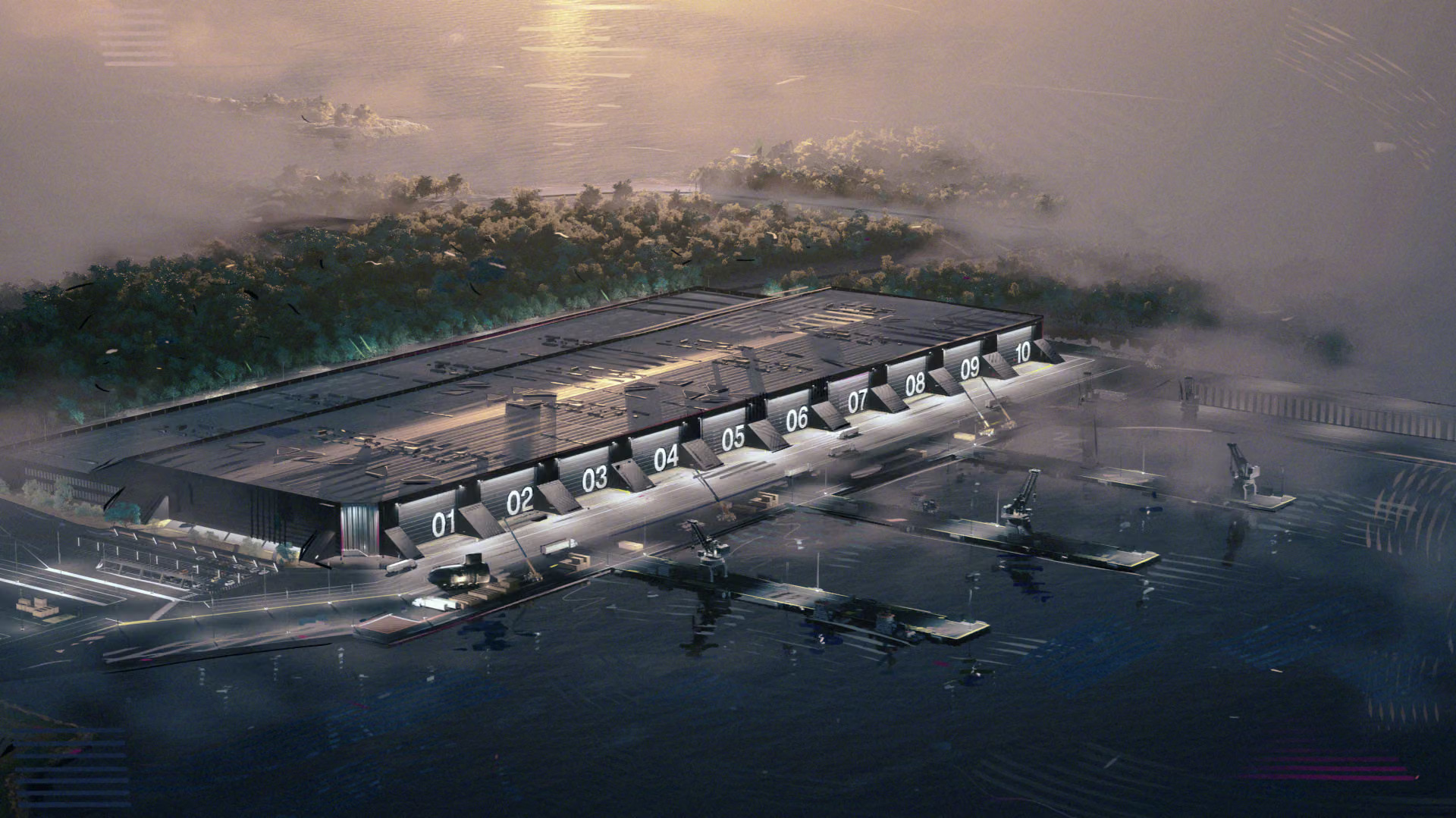
Plans call for a facility covering more than 2 million square feet (185,806 square meters) on a 187-acre (75-hectare) site. It will include high-bay assembly halls, fabrication areas, reconfigurable production lines, and a 1,200-foot (365-meter) graving dock, alongside road, rail, and maritime connections at the Sparrows Point complex.
The new facility is intended to add another source of submarine components alongside the existing work performed by the two primary Virginia-class builders. Anduril said this could allow more construction work to proceed in parallel across the industrial base.
Anduril said Arsenal-2 will create more than 3,100 direct jobs and support over 11,000 indirect jobs. The company expects the facility to begin initial operations in 2030, with production increasing as it builds its workforce, supplier network, and manufacturing capacity.
Anduril’s ArsenalOS
ArsenalOS is Anduril’s manufacturing execution and production management software, designed to connect different parts of the factory floor rather than serve as a conventional shipbuilding design tool.
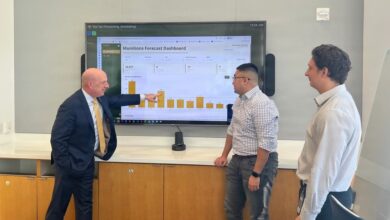
At Arsenal-2, the system will connect fabrication workflows, assembly and outfitting sequences, material movement, inspections, and production documentation. Anduril said this will give workers and managers a real-time view of production and make it easier to track where work stands.
The software is also intended to put digital work instructions and quality controls directly into production processes.
Sensors and other automated systems can feed information into the manufacturing system, while workers such as welders, electricians, pipefitters, shipfitters, and inspectors continue to perform the physical work.