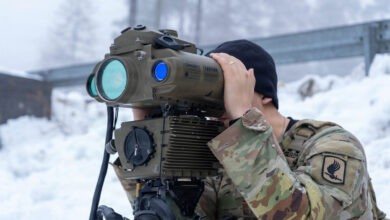
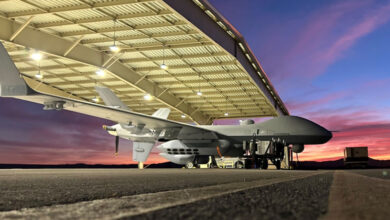
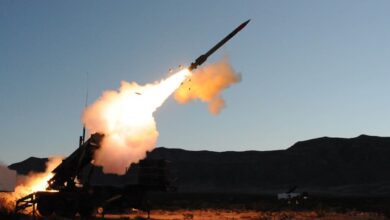
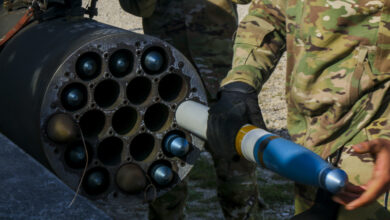
The US Department of Defense has selected four directed energy systems for a counter-drone pilot that will test how lasers and high-powered microwaves perform in real-world operations.
Those chosen by Joint Interagency Task Force 401 (JIATF-401) are AeroVironment’s Palletized High-Energy Laser, Epirus’ Leonidas high-powered microwave system, Kord’s Firefly high-energy laser, and Boeing’s Compact Laser Weapon System.
Lasers can engage drones using electrical power rather than conventional ammunition, while high-powered microwave systems are designed to disrupt drones’ electronics.
This task force plans to run the pilot for a year, giving service members more hands-on experience with operating and sustaining the systems.
The Pentagon, however, has emphasized that these weapons will complement, rather than replace, other counter-drone systems.
“There is no silver bullet, or one size fits all solution to countering the threat of drones,” JIATF-401 director Matt Ross said.
Directed Energy’s Counter-Drone Role
The pilot comes as the US military expands its counter-drone effort beyond traditional guns and interceptors.
Directed energy offers two different approaches to the problem. High-energy lasers concentrate a beam on a target until enough heat damages or destroys the drone. High-powered microwaves instead direct electromagnetic energy toward a target area, potentially disrupting the electronics of several drones at once.
That distinction is particularly relevant as militaries deal with larger numbers of small drones and increasingly coordinated attacks. Both, however, have operational limitations that the Pentagon wants to better understand through the pilot.
Recent US operations have already provided some evidence that directed energy can work outside laboratory conditions. In August, US forces supporting the southern border used an Army Multipurpose High Energy Laser system to defeat three adversarial drones near Fort Bliss.