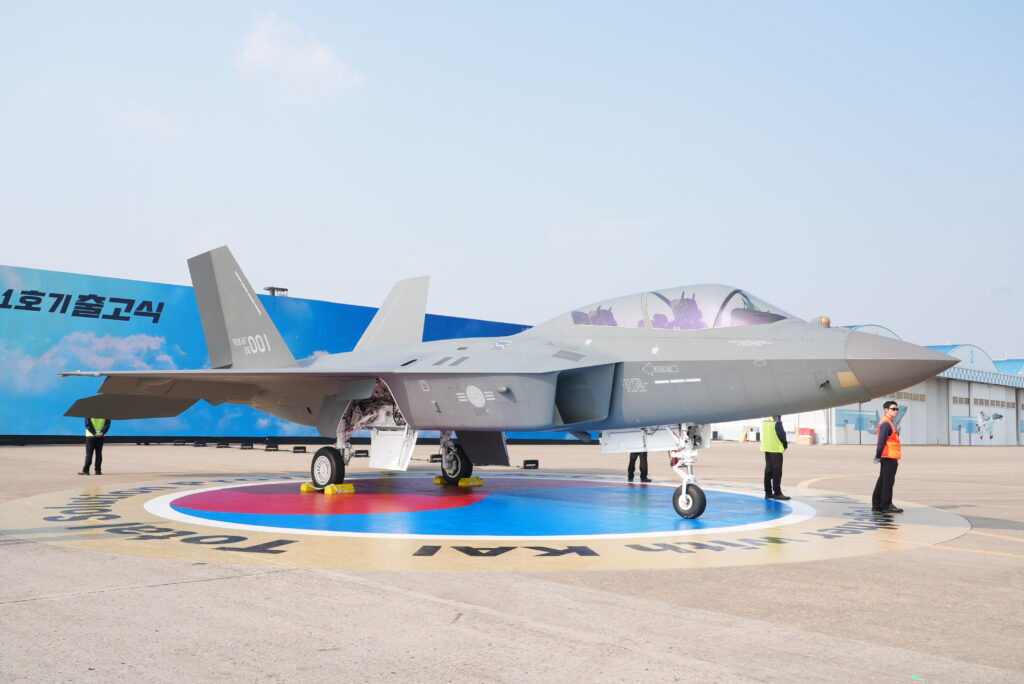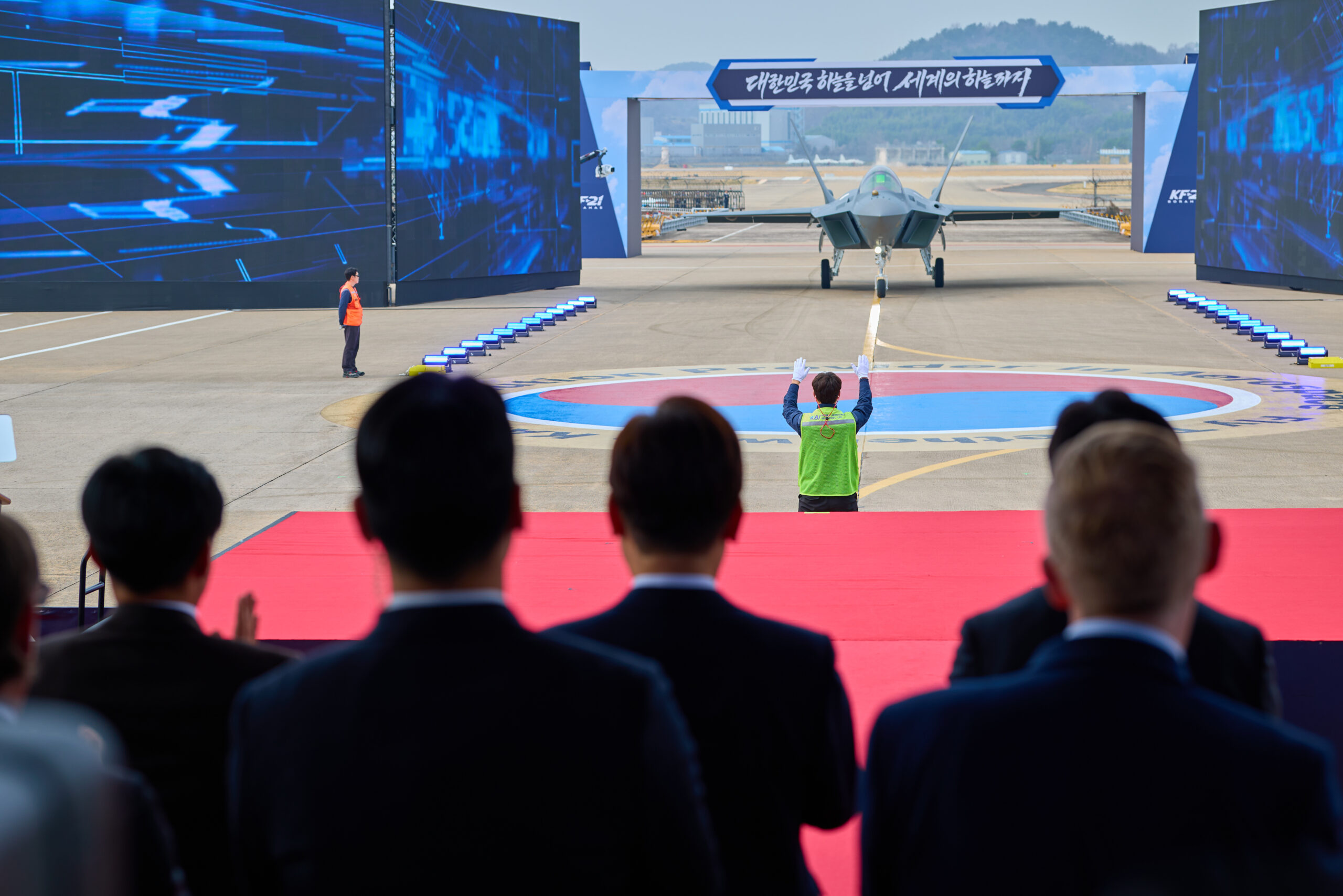

The Republic of Korea Air Force (ROKAF) has officially received its first mass-produced KF-21 Boramae system, marking a major milestone in the nation’s multi-decade drive to field a domestic combat aircraft.
State firm Korea Aerospace Industries (KAI) delivered the platform at its Sacheon plant before flying it to its operational hub at Yecheon Air Base.
The jet was handed over with the tail number 26-001 and in a two-seat configuration.
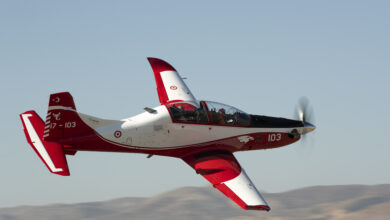
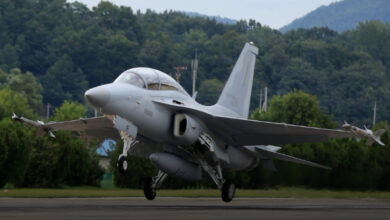
Major Han Jae-seok, one of the ROKAF’s first KF-21-qualified pilots, signed the acceptance documents before flying the supersonic system, escorted in formation by the locally-built FA-50, TA-50, and T-50 aircraft.
The ‘Young Hawk’ Jet Program
The handover comes roughly a decade after development began in December 2015, fulfilling a long-term initiative first announced by former President Kim Dae-jung in 2001.
The 4.5-generation fighter, nicknamed “Young Hawk,” is built to replace the East Asian country’s legacy fleet of F-4s and F-5s.
KAI plans to deliver 40 Block I air-to-air variants by 2028, followed by 80 Block II multirole fighters with advanced strike capabilities through 2032.
Upon commissioning, the jet will be operated by the reactivated 156th Fighter Squadron under the 16th Fighter Wing, a historic ROKAF unit that previously operated F-4E Phantoms before its 2012 disbandment.
Seoul expects to declare the aircraft fully operational by late 2027.
The KF-21 Boramae
South Korea’s KF-21 airframe measures 17 meters (57 feet) long, has an 11-meter (36-foot) wingspan, and carries up to 6,000 kilograms (13,200 pounds) of fuel.
For lethality, the aircraft will use M61A2 Vulcan 20mm rotary cannons, guided and unguided bombs, air-to-air missiles, air-to-surface missiles, and anti-ship missiles.
It will also be protected by various nodes, advanced radars and targeting systems, as well as an electronic warfare suite.
The Boramae flies with twin Hanwha/General Electric F414 engines, delivering an output of 110,000 horsepower for a top speed of Mach 1.8 (2,223 kilometers/1,381 miles per hour), a ceiling of 16,700 meters (54,790 feet), and a range of 1,500 nautical miles (2,778 kilometers/1,726 miles).