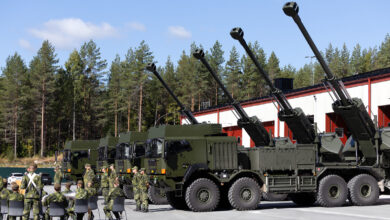

Latvia’s Cabinet of Ministers has opted to procure Excalibur Army’s Morana 155mm self-propelled artillery system over BAE Systems Bofors’ Archer, citing significantly more favorable pricing and shorter delivery times.
“The decision was made following an assessment of the costs of the offers, delivery times, operational capabilities and the involvement of the local defence industry in the procurement,” the Latvian Ministry of Defence said in a statement.
Latvia’s Ministry of Defence launched market research for 155mm wheeled artillery systems in May 2024 and subsequently opened negotiations with both companies following an evaluation of their offers.
In June 2025, Latvia signed a letter of intent to procure 18 Archer systems, followed by government approval of the procurement in January 2026. However, a subsequent assessment found that the Archer procurement was less advantageous, prompting the government to select Morana instead.
The ministry also cited Excalibur Army’s offer to involve Latvia’s local defense industry under the contract as another key factor favoring the Czech system.
The procurement is intended to strengthen Latvia’s artillery units and significantly enhance the National Armed Forces’ indirect-fire, deterrence, and defence capabilities.
Morana
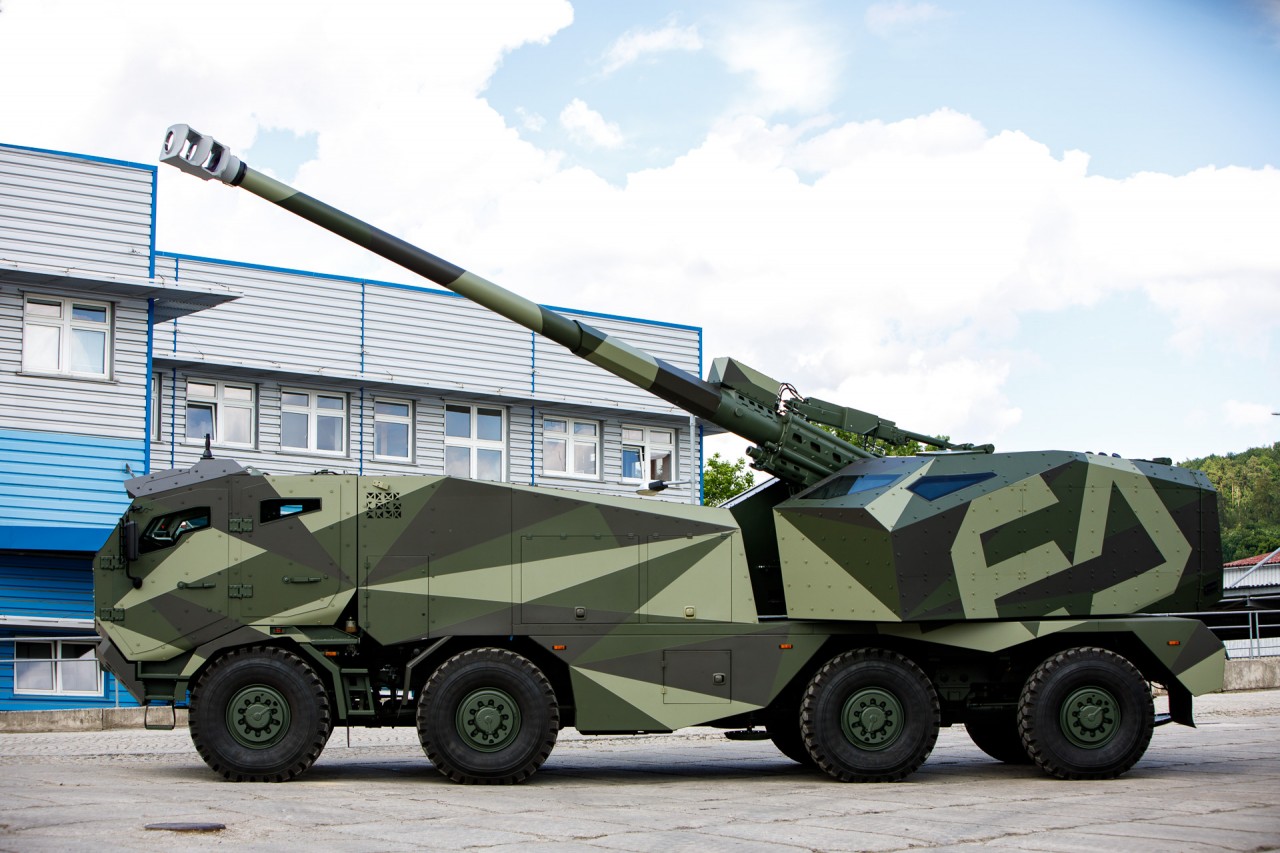
The MORANA combines a TATRA 8×8 chassis with an armored, independently mounted artillery turret. Its automated loading system carries 45 rounds and can fire up to six rounds in the first minute, with Multiple Round Simultaneous Impact (MRSI) capability.
The three-person crew operates from a pressurized, NBC (nuclear, biological, and chemical)-protected cabin certified to STANAG 4569 Level 2. GPS/INS navigation and automated gun-laying systems support rapid and precise firing.
The system has a maximum range of 41.5 kilometers (26 miles), a top speed of 90 kilometers (56 miles) per hour, and can conduct direct fire at ranges of up to 5 kilometers (3 miles) during the day and 3 kilometers (2 miles) at night.
An integrated secondary weapon provides additional protection against close-range threats and low-altitude unmanned aerial vehicles.