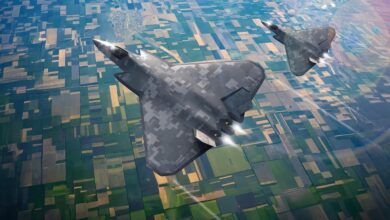
Days after initiating steps to join the French-led multinational Future Combat Air System (FCAS) sixth-generation fighter program, India has joined its rival, the Global Combat Air Programme (GCAP), as a “dialogue partner.”
India and the UK held detailed discussions on the matter before New Delhi was nominated for the role, The Tribune reported, citing unnamed UK officials.
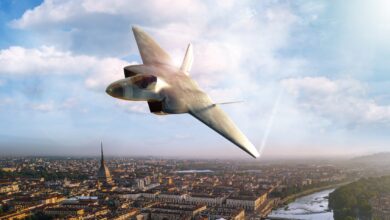
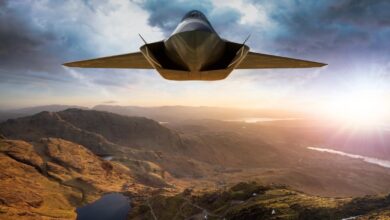
The GCAP is a joint development program involving the UK, Italy, and Japan. It aims to develop a next-generation fighter by 2035, eventually replacing the Eurofighter Typhoon in British and Italian services. By comparison, the FCAS is expected to achieve full operational capability in the 2040s.
According to The Tribune, “dialogue partner” status will allow New Delhi to engage with the three GCAP countries on the fighter, including its development progress, technology, and capabilities.
“It does not mean India is joining as buyer or developer but gets to understand the concept of the project, in its broadest sense,” the Indian daily wrote, citing UK officials.
Earlier in August, Canada joined the program as an observer, giving it deeper access to the project, including discussions on “industrial collaboration” and “long-term delivery plans,” the UK government said.
While Canada has a non-decision-making role, its participation “paves the way for discussions on Canada’s future participation and contribution to GCAP,” the government added.
Britain’s BAE Systems, Italy’s Leonardo, and Japan’s Japan Aircraft Industrial Enhancement Co. Ltd. are jointly developing the aircraft through their joint venture, Edgewing. The company recently received a 4.6-billion-pound ($6.23-billion) contract from the UK government to advance the project.

India’s Gamble on Sixth-Generation Aircraft
India’s interest in next-generation fighter programs comes as it is already developing a fifth-generation aircraft, with induction expected in 2035.
Several countries have already fielded fifth-generation fighters, while the first operational aircraft of its kind, the F-22 Raptor, has been in service for two decades.
India’s neighbor, China, has also made significant advances in combat-aircraft technology after relying heavily on Russian aircraft and technology for decades. Beijing now operates an estimated 300 J-20 fifth-generation fighters, according to the Royal United Services Institute, and has begun flight testing two sixth-generation fighter prototypes, according to the Pentagon’s annual report to Congress.
While fifth-generation combat aircraft place a strong emphasis on stealth, achieved through features such as optimized airframe designs, internal weapons bays, and radar-absorbent materials, “sixth-generation” refers not just to the aircraft itself but to a broader combat-air system.
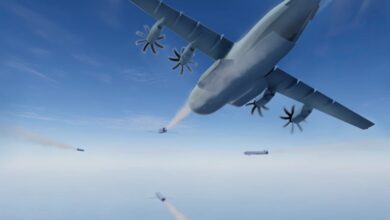
It is expected to combine advanced stealth and sensors with artificial intelligence, networking, electronic warfare, and the ability to operate alongside uncrewed combat aircraft.
Participation in a sixth-generation program could give India valuable insight into the technologies and development processes involved in next-generation combat aircraft, but deeper involvement would also require significant investment and could put pressure on funding for the country’s indigenous fighter program.
Moreover, Leonardo chief executive Lorenzo Mariani reportedly said at the Farnborough Airshow last month that any new partner would need to join the program by the end of 2026, giving India limited time to weigh the costs and benefits of deeper participation.