
Saab and Canada’s Defence Investment Agency have signed a preliminary agreement to negotiate over a proposed purchase of six GlobalEye airborne early warning and control aircraft for the Royal Canadian Air Force.
The agreement follows Canada’s decision in May to name Saab its preferred supplier.
Ottawa plans to acquire six aircraft, along with associated systems, training, and support, but has not placed an order.
Negotiations will determine the aircraft’s configuration and how the program would be carried out.
Canada wants the aircraft to detect threats at long range and help coordinate a response, particularly across the Arctic and other remote areas.
The planned capability would also support Canadian contributions to the North American Aerospace Defense Command and NATO operations.
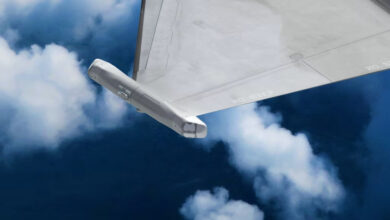
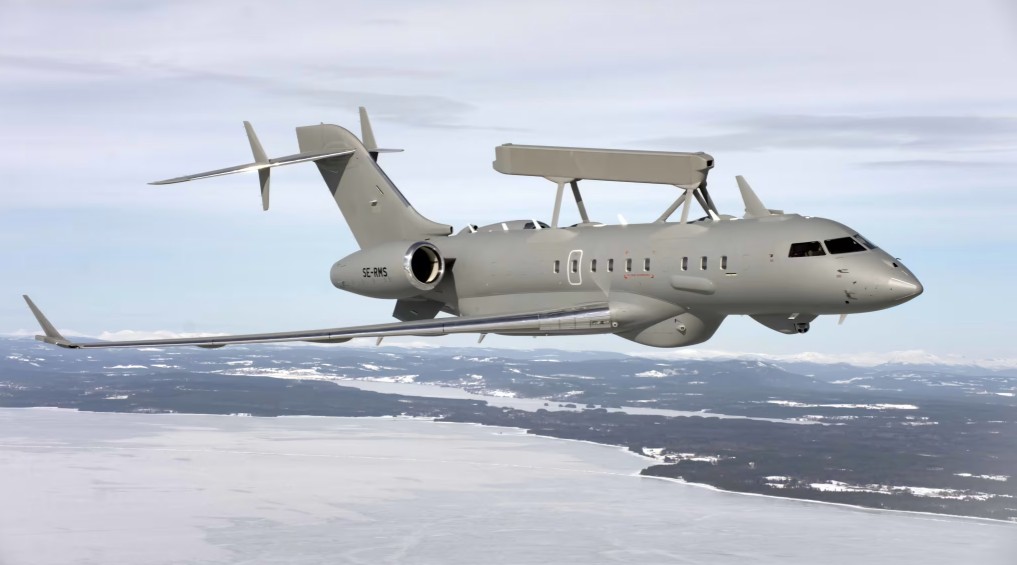
GlobalEye is based on the Canadian-built Bombardier Global 6500 and uses radar and other sensors to monitor activity in the air, at sea, and on land.
Canadian companies could take part in aircraft production, mission-system integration, and technology work.
Saab has also partnered with Canadian firm CAE on training and simulation for its proposal.
GlobalEye’s Surveillance Capabilities
GlobalEye is designed to remain airborne for more than 12 hours.
Its main sensor is the Erieye Extended Range radar, housed in a 33-foot (10-meter) structure above the fuselage.
According to Saab, the aircraft has an instrumented range of 400 miles (650 kilometers) and can detect low-flying threats more than 250 miles (400 kilometers) away when operating at 35,000 feet (10,700 meters).
GlobalEye also carries maritime surveillance radar and sensors that help crews identify what they detect.
According to Saab, the combination can track small vessels and detect objects as small as a submarine periscope.
A separate radar can monitor moving targets on land and produce images regardless of weather, allowing crews to build a picture of activity across air, sea, and land during the same mission.